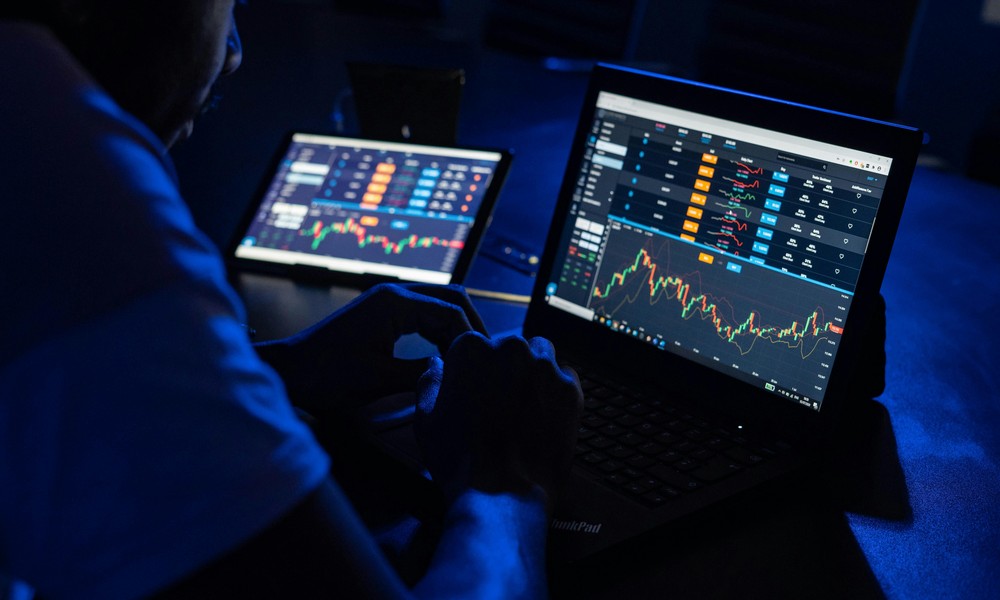
HFT is crucial in the modern financial markets. The traders and institutions rely on advanced algorithms and powerful computers to execute trades. The concept of HFT stocks (HFT หุ้น) is close to this practice as trades focus on highly liquid stocks where fast execution makes small but frequent profits.
Firms can place thousands or millions of orders in a short time in high-frequency trading. HTF mainly benefits institutional investors. The effects are felt by retail traders who participate in the same market. Traders see why market prices move quickly by understanding how HFT works.
What is High Frequency Trading?
High frequency trading is a form of algorithmic trading using advanced computer programs. It analyzes markets and executes trades at extremely high speeds. These systems rely on:
- mathematical models
- real-time data
These identify small price differences across markets.
Investors hold positions for hours or days. The HFT strategies hold positions for seconds or even milliseconds. The main goal is to profit from tiny price movements, which occur frequently throughout the trading day.
Traders react to market changes much faster than manual trading would allow. The speed gives HFT firms a competitive advantage in many financial markets.
High-frequency trading is built around:
- speed
- automation
- algorithms
The firms can execute large volumes of trades almost instantly.
High-frequency trading
High-frequency trading systems operate through complex algorithms connected to stock exchanges. These systems continuously scan market data, looking for small price inefficiencies.
The algorithm detects an opportunity to place a buy or sell order immediately. HFT traders complete thousands of transactions before traditional traders even react, because the process happens within milliseconds.
For example:
An HFT system quickly buys the cheaper stock and sells it at the higher price if a stock is briefly priced lower on one exchange compared to another. The profit from each trade is small, but repeating the process many times generates significant returns.
High-frequency trading uses automated systems that detect and exploit small price differences across markets quickly.
Effects of High Frequency Trading on market liquidity
High-frequency trading is one of the most discussed benefits. Liquidity refers to how assets can be bought or sold without significantly affecting their price. HFT firms act as market makers. It continuously places buy and sell orders. The activity keeps markets active and ensures there are always participants ready to trade.
For example:
The presence of HFT firms provides sell orders to complete the transaction when a trader wants to buy shares quickly. This reduces bid-ask spreads and makes trading more efficient for many participants.
High-frequency trading improves liquidity by providing:
- buy
- sell
How does HFT influence retail traders?
Retail traders wonder how high-frequency trading affects their trading experience. Individual investors cannot match the speed of algorithmic systems. Thus, they still operate within the same market environment.
Faster movement has noticeable effects. Prices change rapidly because algorithms react instantly to news and data. Traders need to rely on:
- clear strategies
- disciplined risk management
Tighter spreads in many stocks are another impact. Opportunities disappear quickly, which reduces trading costs. Retail traders focus on strategy rather than speed.
The HTF speed cannot be competed by retail traders. They still benefit from:
- improved liquidity
- tighter spreads
FAQs
What is the primary goal of HFT?
The goal is to earn a profit from the small price movements. They perform it by executing large trades at very high speed.
Who uses HFT?
HFT is primarily used by:
Can retail traders use HFT strategies?
The retail traders cannot access the infrastructure required for HFT. However, they are still traded in markets influenced by HFT.
Is HFT legal?
Yes. HFT trading is legal as long as it follows the rules and regulations.