Replacing a garage door returns about 93% of its cost at resale, more than any other home improvement project you can tackle. That’s the kind of math that makes homeowners sit up straight. But here’s the catch: that jaw-dropping return only applies if you pick the right door. Throw money at the wrong features and you’re left with a garage door that looks great in a showroom and out of place on your street. Let’s sort out which upgrades are worth every penny and which ones just drain your budget.
This guide walks through the garage door features that genuinely move the needle on curb appeal, energy bills, and resale value. You’ll leave with a clear shortlist of what to spec on your next door, and a few upgrades you should politely decline. We’re pulling from real estate data, energy research, and the practical reality of how these doors hold up through Georgia’s heat and humidity.
Why the Garage Door Punches Above Its Weight
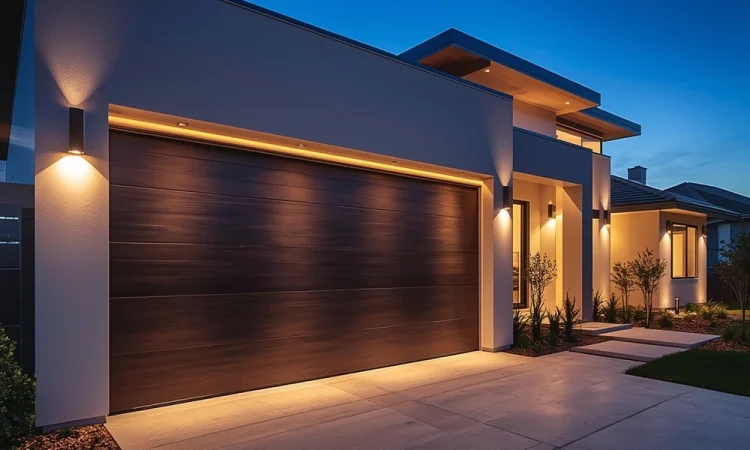
Your garage door takes up roughly a third of your home’s front-facing exterior. That single slab of steel, wood, or composite is doing more heavy lifting for your home’s first impression than any window box or porch light ever will. When a buyer pulls up to a house, their eyes lock onto the biggest surface on the facade. If that surface is dented, faded, or humming like a lawnmower, the whole property reads as neglected.
Look at it through an appraiser’s eyes. The National Association of Realtors has tracked remodeling payback for years, and garage door replacement consistently lands near the top of the list. In their 2023 data, a mid-range garage door replacement recouped nearly 93% of its cost. Compare that to a kitchen remodel, which typically claws back around 67%. There’s no contest, and the door costs a fraction of a kitchen reno. That 93% figure assumes a sensible, middle-of-the-road door, not a custom carved mahogany showpiece.
The real lesson here isn’t “spend as much as possible.” It’s that a clean, modern, well-insulated door signals to a buyer that the home was maintained. That signal alone carries value far beyond the door’s sticker price.
The Four Features Worth Paying For
Not every bell and whistle earns its keep. These four features deliver measurable returns, whether you’re selling next spring or staying put for a decade.
Insulation That Actually Does Something
Here’s a stat that surprises people: a typical attached garage shares walls with your living space, and a poorly insulated door turns that whole room into a heat sink. The U.S. Department of Energy estimates that properly insulating your garage can reduce the energy load on adjacent rooms, especially if you have a room above the garage. That means your HVAC system works harder in July and January than it needs to.
When you’re shopping, look at the door’s R-value. A double-layer steel door with a vinyl backing lands around R-6. A triple-layer door with injected polyurethane foam hits R-13 to R-18. For a Georgia climate, you don’t need the arctic-grade stuff, but R-10 and up makes a real difference in the summer heat radiating into your bonus room. It also quiets the door, so you don’t hear every rainstorm from your home office.
Steel Construction With a Transferable Warranty
Wood doors look stunning on day one. Steel doors look nearly identical and survive the next twenty years without warping, cracking, or peeling. The best steel doors use a galvanized core that resists the rust that humidity loves to breed.
What separates a good steel door from a cheap one is the warranty. A five-year warranty on parts is table stakes. A lifetime warranty on the panels and a five-year warranty on the hardware shows the manufacturer trusts its own product. That transferable warranty is a genuine selling point when you put the house on the market, because the new buyer inherits it. Mention that at closing, and you’ve just added a tangible benefit to the transaction.
Windows That Are Actually Placed Well
Windows on a garage door do two jobs: they let in natural light and they break up a massive flat surface. But placement matters more than most people think. Short, horizontal windows across the top of the door look dated, a reminder of the 1990s. Tall, narrow windows on the upper third of each panel look intentional and contemporary.
Go for glass with a frosted or tinted finish. Clear glass turns your garage into a fishbowl display of your storage bins and lawn tools. Frosted glass gives you the light without the exhibition. And if you’re in a neighborhood with strict HOA rules, check the covenants before you order, some communities have opinions about window placement that border on artistic criticism.
A Modern Opener With Battery Backup
Nobody thinks about the opener until the power goes out during a storm and they can’t leave the house. A belt-drive opener with a built-in battery backup solves that problem. It’s quieter than a chain drive, which matters when your garage sits directly under a bedroom, and the backup battery means you’re not trapped at home when the grid blinks.
Look for an opener with smart features, too. The ability to check from your phone whether you left the door open is one of those small features that becomes indispensable the first time you’re on vacation and second-guessing yourself. These openers cost more upfront, but they’re a different class of product than a bare-bones chain drive.
The Two Features You Should Skip
Resist the upselling. These upgrades sound great in the showroom and disappoint in reality.
Decorative Hardware Kits
Those faux hinges and handles that manufacturers sell in glossy catalogs? They’re bolted on purely for looks, and experienced buyers know it instantly. A real carriage door uses functional hinges to support the door’s weight. A decorative kit on a modern steel door is an admission that the style is fake, and real estate agents pick up on that immediately. Skip it. If you want the carriage house look, buy a door that’s actually designed for it, some manufacturers make steel doors with recessed panels that mimic the look authentically.
Ultra-Custom Color Matches
That perfect shade of seafoam green that matches your front door exactly? It’s a gamble. Custom colors cost a premium, and if you sell to someone whose taste runs to classic white or warm beige, they’re looking at a repaint job or a replacement. Neutral tones with a wood-grain finish have the broadest appeal. When you’re selling a house, you’re not decorating for yourself anymore.
Figuring Out Your Actual Budget
Let’s get concrete about money. A solid mid-range steel door with insulation runs between $1,200 and $2,500 installed. That’s the sweet spot for resale value. A premium door with custom glass and a high-end finish can easily hit $4,000, and the return on that extra spend gets murky. The sweet spot, if you’re planning to sell within five years, is a clean, neutral, insulated steel door with a modern opener. You spend around $2,000 and you get nearly all of it back at closing.
Here’s a practical way to frame the decision: your garage door is the most visible home improvement you can buy for under $3,000. A roof replacement costs ten times as much and nobody compliments it. The door gets seen every single day, and it earns its keep the day the appraiser walks the lot.
Keep a simple checklist when you’re comparing quotes. Confirm the R-value is at least R-10. Verify the warranty transfers to a new owner. Ask for a belt-drive opener with battery backup if your budget stretches. And pick a finish the next homeowner will tolerate, white, almond, or a wood-grain bronze.
When you’re ready to move on this, hire someone who does this day in and day out. The installation quality matters as much as the door itself. A shoddy install on a premium door performs worse than a clean install on a mid-range model. Look for a crew that’s done this in your specific market, because regional weather patterns affect how doors settle and seal. Local Atlanta garage door installers who know the humidity and heat will handle the seasonal expansion issues that a national chain might miss.
Measuring the Real Return
Here’s the honest math that most articles skip: the 93% payback number assumes you don’t over-improve. Spend $2,000 on a door that fits your neighborhood and you’ll get most of it back. Spend $5,000 on a door that’s fancier than every house on your block, and you’ll be lucky to recover half.
The Remodeling Magazine Cost vs. Value report for 2024 reinforces this pattern year after year. Garage door replacement consistently ranks as one of the few projects where homeowners recoup near or above their investment. But the report also shows that mid-range projects outperform upscale ones in payback percentage. The takeaway: buy the best mid-range door you can find, not the most expensive one.
Think of your garage door as the handshake of your home. It’s the first thing people touch when they arrive, the first thing they see from the street, and the thing that physically connects your car to your house six times a day. A good door makes that entire experience feel solid. A bad one makes everything feel off, even if you can’t say why.
Before you sign a quote, go stand on your curb and imagine the door you’re considering. Does it look like it belongs on your house, or does it look like it wandered over from a different property? That thirty-second curb check is the most honest appraisal you’ll get. Trust it.